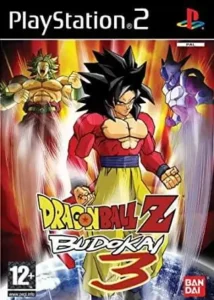
Dragon Ball Z: Budokai 3
Unleash devastating combos and transformations in this fast-paced 3D fighter featuring your favorite Dragon Ball Z characters.
Dragon Ball Z: Budokai 3 remains the definitive Budokai experience in 2026, combining accessible 3D combat with surprising mechanical depth that rewards mastery. Unlike its predecessors, Budokai 3 introduced the open-world Dragon Universe mode alongside a revamped Ki system that transforms how you approach every match. This Dragon Ball Z Budokai 3 PS2 ISO guide focuses on advanced combat theory, character optimization through the capsule system, and efficient Dragon Universe routing to unlock all 42 playable characters without unnecessary grinding.
What sets Budokai 3 apart from typical anime fighters is its strategic layer—the capsule customization system creates genuine build diversity, and the Dragon Rush mechanic introduces rock-paper-scissors mind games during combo extensions. Combined with cel-shaded visuals that capture the anime's aesthetic and transformation mechanics that don't drain Ki like in Budokai 1 and 2, this title offers both nostalgic appeal and competitive depth that modern emulation on PCSX2 enhances with resolution scaling and stable 60fps gameplay.
Table of Contents
Technical Considerations
Budokai 3 runs exceptionally well on PCSX2 with minimal hardware demands, though specific texture offset adjustments prevent UI corruption during transformation sequences. The Greatest Hits and Japanese versions support progressive scan (480p mode) by holding X + Triangle at launch, which significantly improves image clarity when upscaling to 4K or 6X internal resolution.
Combat Systems & Frame Theory
Budokai 3's fighting engine diverges from traditional 2D fighters by emphasizing momentum shifts and resource management over frame-perfect execution. The revamped Ki system establishes a base Ki level for each character—when your current Ki exceeds this baseline, attack power increases slightly, but dropping below base Ki weakens your defense substantially. Transformations like Super Saiyan now raise the base Ki threshold rather than constantly draining energy, which fundamentally changes how you approach meter management compared to Budokai 1 and 2.
The core control scheme assigns punch, kick, Ki blast, and guard to the four face buttons, with special moves executed through directional inputs combined with button presses. What separates competent players from experts is understanding the teleport counter system—successfully reading an opponent's attack string lets you vanish behind them mid-combo, but the attacker can predict your counter by inputting their own teleport to continue pressure. This creates a mental stack where both players burn Ki to maintain or escape offensive sequences.
Dragon Rush Mind Games
Dragon Rush functions as Budokai 3's command grab system, initiating a rock-paper-scissors minigame where both players select punch, kick, or Ki blast simultaneously. If the attacker matches the defender's choice, the rush ends and both players reset to neutral; if the defender guesses wrong, they eat massive damage and potential ring-out. The directional input during teleport rush determines knockback angle—Up + Guard launches skyward, neutral Guard sends forward, Down + Guard spikes groundward—which matters for stage positioning and combo routing.
Dash mechanics add another mobility layer: tapping forward and holding initiates a flying dash for most characters, though Kid Goku and similar fighters sprint instead. Air mobility becomes critical in 3v3 team battles where you need to escape crossups or chase fleeing opponents who are stalling for Ki regeneration.
Hyper Mode Risk-Reward
Activating Hyper Mode with L2 engulfs your character in a red aura, granting super armor against weak attacks but disabling your guard entirely. This state drains Ki continuously—if the meter empties before you land a finishing move or cancel into an ultimate attack, your character enters a fatigue state that strips transformations and leaves you vulnerable. Competitive players use Hyper Mode for guaranteed combo conversions or to muscle through projectile spam, but reckless activation against defensive opponents can cost you the round when fatigue sets in.
Capsule Build Architecture
The capsule system defines Budokai 3's metagame—each character equips ability capsules that grant special moves, transformations, stat boosts, and unique mechanics within a limited slot budget. Breakthrough is a 7-slot capsule that auto-equips all Death Moves, Dragon Rush enders, and Ultimate Attacks with triple stacking (50% damage increase), but optimized custom builds consistently outperform Breakthrough by leveraging character-specific capsules and synergies.
Top-Tier Capsule Priorities
High-level play revolves around three core capsule philosophies:
- Offensive Burst: Double-stack your strongest special move (costs 2 slots) and equip Meditation for faster Ki regeneration, enabling frequent ultimate attack pressure
- Transformation Lock: Characters dependent on Super Saiyan or fusion forms must avoid Yakon (an opponent-controlled capsule that disables transformations), making them vulnerable in custom capsule matches
- Utility Stacking: Videl's Kiss (self-heal on hit), Mixed Blood Power (damage scaling), and Turtle Shell (defense boost) create attrition-focused builds for characters with strong neutral but weak burst damage
Omega Shenron, Piccolo, Dabura, and Cell dominate the custom capsule tier list because they combine strong base frame data with unique capsules that amplify their neutral game without transformation reliance. Conversely, Vegeta and Teen Gohan drop significantly in Breakthrough-only formats since they lose access to synergistic equipment that covers their defensive gaps.
PCSX2 Performance Configuration
Running Budokai 3 on PCSX2 in 2026 requires minimal tweaking for most hardware configurations, but specific renderer adjustments prevent visual glitches during ultimate attacks and transformation cutscenes. The primary issue involves texture coordinate offsets—without correction, UI elements and character models exhibit polygon warping at internal resolutions above native.
Recommended Graphics Settings
For stable 60fps with upscaled visuals, apply these settings in PCSX2 1.7+ nightly builds:
Display
- Deinterlacing: None (for Greatest Hits/JP versions in progressive scan mode) or Automatic (for PAL/EU versions)
Rendering
- Renderer: DirectX 12 or Vulkan (both tested stable; choose based on GPU vendor)
- Internal Resolution: 6X native or higher depending on GPU headroom
- Manual Hardware Renderer Fixes: Enabled
Upscaling Fixes
- Texture Offsets: X = 500, Y = 500
- Wild Arms Hack: Enabled (prevents texture warping during special moves)
Mid-range configurations with Ryzen 5 5600X and RX 6600-class GPUs maintain locked 60fps at 6X internal resolution with these settings. Lower-end hardware should drop to 3X or 4X native resolution and verify MTVU (multi-threaded microVU1) is enabled in Emulation Settings for CPU-bound scenarios.
Progressive Scan Activation
The Greatest Hits and Japanese versions support 480p progressive scan mode, which dramatically improves image quality when upscaling. Hold X + Triangle during the boot screen until the display mode selection menu appears—choose Progressive for cleaner output. PAL/European versions lack this option, requiring Automatic deinterlacing to minimize combing artifacts.
Dragon Universe Routing Strategy
Dragon Universe serves as Budokai 3's story mode, featuring 11 playable characters who traverse an open world map through the Saiyan, Frieza, Android, and Majin Buu sagas. Each character's route unlocks specific fighters, capsules, and Dragon Balls, with critical branching paths that permanently lock out content if you miss trigger conditions.
Efficient Unlock Order
Follow this sequence to minimize Dragon Universe playthroughs while unlocking the full roster:
- Goku (First Run): Complete the standard route to unlock Vegeta, then defeat Raditz and visit the northeastern space pod near Snow Mountains to unlock Bardock
- Vegeta (First Run): Progress to the Frieza saga and revisit the western-most red marker after defeating Frieza with Goku—this triggers the Super Saiyan Vegeta fight that unlocks Cooler
- Goku (Second Run): After unlocking Vegeta and completing his route, replay Goku's Dragon Universe and defeat Frieza; three red markers appear—visit the western-most to fight Cooler again
- Primary Character Routes: Clear Dragon Universe with Kid Gohan, Teen Gohan, Adult Gohan, Piccolo, Krillin, Tien, Yamcha, and Uub to unlock Dragon Arena mode
- Goku (Third Run for Broly): In the Majin Buu saga, defeat Majin Vegeta and Fat Buu, then visit the mountains near Goku's house (where Supreme Kai appears) before fighting Super Buu. After defeating Kid Buu inside Buu, Goku and Vegeta sense another power—go to the forested island northwest to fight and unlock Broly
- Uub Route: Unlocked after clearing other characters; his Dragon Universe unlocks GT-era content and SSJ4 Goku capsule
Missable Content Warnings
Several unlocks require visiting unmarked "???" locations that don't appear as red objective markers:
- Dragon Radar (for Omega Shenron): In Goku's Buu saga, visit the western islands near World Tournament area after defeating Broly; Goku experiences a headache and transforms briefly, triggering a conversation with Bulma who grants the Dragon Radar
- Supreme Kai Unlock: During any character's Buu saga, visit the plains west of Central City after defeating Dabura and Majin Vegeta to find Supreme Kai and unlock him
- Kabito Shin Fusion: After unlocking Supreme Kai, complete Adult Gohan's Dragon Universe and visit the forested western island to witness the Potara fusion cutscene
Set game difficulty to Very Easy in options for faster progression—you gain less EXP per fight, but low-level characters easily win matches, whereas high-level characters can still lose on Very Hard due to AI input reading and damage scaling.
Character Tier Analysis
Budokai 3's competitive balance revolves around two distinct metagames: Custom Capsule (where players optimize equipment builds) and Breakthrough-Only (where all characters use the standardized Breakthrough capsule). Character viability shifts dramatically between formats due to transformation dependence and unique capsule synergies.
Custom Capsule Meta (2026 Community Consensus)
Top Tier: Omega Shenron, Piccolo, Dabura, Cell
- These characters combine fast normals, safe special moves, and strong Dragon Rush conversions without relying on transformations that Yakon disables
- Piccolo's regeneration capsules enable attrition strategies, while Dabura's command grab setups force opponents into lose-lose scenarios
Upper Tier: Vegeta, Teen Gohan, Android 18, Kid Buu, Krillin, Goku, Bardock
- Transformation-reliant characters (Vegeta, Teen Gohan, Goku) remain viable due to their strong base movesets, but Yakon vulnerability drops them from top tier
- Android 18 and Krillin excel with custom builds that emphasize their neutral game pokes and energy absorption mechanics
Bottom Tier: Uub, Videl, Saibamen, Hercule
- Severely limited movepools and poor frame data make these characters unviable even with optimized capsule setups
Breakthrough Format Adjustments
Great Saiyaman rises in Breakthrough-only tier lists because the standardized capsule load removes equipment variety that other characters exploit. Conversely, Trunks drops significantly since he loses access to custom capsule stacking that amplifies his burst damage windows.
Advanced Combat Techniques
Mastering Budokai 3's high-level play requires understanding cancel mechanics, Ki management windows, and stage awareness that the tutorial never explains.
Cancel Combo Theory
Each character's combo string follows a branching tree where you mix punch (P) and kick (K) inputs to access different routes. Advanced players memorize optimal sequences that end in special move cancels—for example, landing a PPKK string lets you cancel the final hit into Kamehameha for guaranteed chip damage even if the opponent guards the full string. Forward and backward directional inputs during combo strings alter specific hits, creating left-right mixups when combined with sidestep cancels.
Double-stacking your strongest special move via capsule slots increases damage by 50%, turning mediocre pokes into kill confirms when you have full Ki. Pair this with Meditation capsule for accelerated Ki gain between rounds—the resource advantage compounds across a best-of-three set.
Ring Positioning Strategy
Unlike 2D fighters, Budokai 3's 3D arenas have boundaries that enable ring-outs when you land directional Dragon Rush or knockback ultimates near edges. Competent players bait opponents toward corners, then commit to high-risk Hyper Mode activation for unblockable ultimate attacks that win via ring-out rather than depleting the health bar. Conversely, defensive players maintain center stage and punish overzealous offense with teleport counters that swap positioning.
Troubleshooting & Optimization FAQ
Why does Budokai 3 have texture warping on PCSX2 at high resolutions?
Enable Manual Hardware Renderer Fixes in Graphics settings, then set Texture Offsets to X=500, Y=500 and activate Wild Arms Hack. This corrects polygon distortion during transformations and ultimate attacks at 4X native resolution and above.
What are the best PCSX2 settings for Dragon Ball Z Budokai 3 performance?
Use DirectX 12 or Vulkan renderer, set internal resolution to 6X native for high-end GPUs or 3X for mid-range, enable MTVU in Emulation Settings, and apply texture offset corrections. Progressive scan mode (Greatest Hits version) via X + Triangle at boot further improves clarity.
How do I unlock Broly in Dragon Ball Z Budokai 3?
Complete Goku's Dragon Universe three times. On the third run during Majin Buu saga, defeat Majin Vegeta and Fat Buu, then visit the mountains near Goku's house before fighting Super Buu. After defeating Kid Buu inside Buu, travel to the northwestern forested island to fight Broly.
Which characters are top tier in Budokai 3 competitive play?
In custom capsule format, Omega Shenron, Piccolo, Dabura, and Cell dominate due to strong base movesets without transformation dependency. Vegeta, Teen Gohan, and Goku rank upper tier but suffer against Yakon capsule that disables transformations.
Should I use Breakthrough capsule or custom builds?
Custom capsule builds consistently outperform Breakthrough for experienced players. Double-stack your strongest special move, equip Meditation for Ki regeneration, and add character-specific utility capsules. Breakthrough simplifies loadouts but sacrifices 20-30% optimization potential.
How does the Ki system work in Budokai 3?
Each character has a base Ki level that naturally attracts current Ki toward it. Ki above base slightly boosts attack power; Ki below base weakens defense. Transformations raise the base Ki threshold rather than drain meter, unlike Budokai 1 and 2.
What is Hyper Mode and when should I activate it?
Hyper Mode (L2) grants red aura, super armor against weak attacks, but disables blocking and drains Ki. Use it for guaranteed combo conversions or to push through projectile spam. If Ki depletes before landing a finisher, you enter fatigue state that strips transformations.
Why is Dragon Universe mode not progressing my story?
Many unlocks require visiting unmarked question mark locations that don't appear as red objective markers. Use a guide to identify trigger points for Bardock (space pod northeast), Cooler (western marker after Frieza), and Omega Shenron (Dragon Radar from Bulma).
Can I unlock Dragon Arena without completing every character?
No. Dragon Arena requires clearing Dragon Universe with all 10 primary characters: Goku, Vegeta, Kid Gohan, Teen Gohan, Adult Gohan, Piccolo, Krillin, Tien, Yamcha, and Uub. Broly is optional for Dragon Arena access.
How do Dragon Rush inputs work during combos?
Dragon Rush initiates a simultaneous button press minigame where both players choose punch, kick, or Ki blast. If the attacker matches defender's choice, the rush ends. Directional inputs during teleport rush control knockback angle: Up launches, neutral pushes forward, Down spikes.
What difficulty should I play Dragon Universe on?
Very Easy difficulty speeds up unlocks significantly. You gain less EXP per fight, but low-level characters easily win matches. Higher difficulties introduce AI input reading that can cause losses even with high-level characters, slowing progression without meaningful challenge.
Does Budokai 3 support widescreen or HD texture packs?
PCSX2 naturally supports widescreen via aspect ratio correction in Graphics settings. Community texture packs exist but require manual installation via PCSX2's texture replacement folder. Progressive scan mode on Greatest Hits version provides cleaner native output for upscaling.
Dragon Ball Z: Budokai 3 rewards players who invest time learning its layered combat systems and capsule optimization metagame—whether you're hunting all 42 characters through Dragon Universe or grinding Dragon Arena rankings for competitive clout. The PCSX2 emulation scene in 2026 has matured to the point where this PS2 classic runs flawlessly at 4K resolution with texture corrections that surpass the original PS2 hardware output. Master the teleport counter mind games, optimize your capsule builds around character archetypes, and explore branching Dragon Universe paths to experience why the Budokai community still considers this the peak of the series two decades after release.